
John is running a small accounting firm based in London and is mostly into handling the payroll of multiple companies in the UK. One fine day, he double-checked the numbers, and it turned into a nightmare; one of his clients’ employees was paid incorrectly. It’s a small payroll error, but with heavy consequences in the form of a penalty.
It’s a reality of all accounting firms; in fact, studies show that 25% of UK employees have experienced payroll mistakes at some point in their careers, which is demoralising for them.
However, HMRC is not in the mood to let go of common payroll errors easily, and the good news is that they can be avoided with the right knowledge, tools, and practices. In this blog, we’ll explore the causes of payroll errors, the most common types, and practical steps on how to avoid payroll errors, keeping your accounting firm compliant and your employees happy.
What Are Payroll Errors?
Payroll errors take place when a mistake is made in the salary calculations of your client’s employees. The range of payroll errors is widespread, starting from incorrect pay amounts to miscalculated tax deductions to non-compliance with UK employment laws. And getting payroll right is important for maintaining the trust of your clients.
These days, small accounting firms in the UK handle most of the payroll responsibilities of businesses. This makes your practice responsible for processing payroll accurately and in compliance with HMRC regulations. Payroll errors can lead to serious consequences, including penalties, damage to your reputation, and straining your relationship with clients. It’s best to avoid them.
What Are the 7 Common Types of Payroll Errors in the UK?
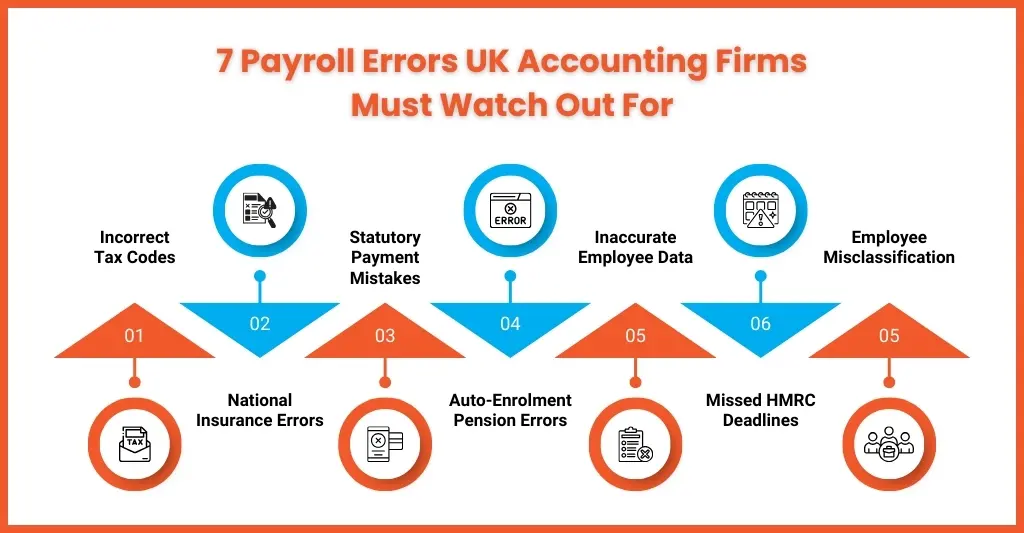
With ever-evolving tax laws, statutory deductions, and reporting requirements, the list of payroll errors has gone up significantly, making it ever more important to know about them to avoid them. Below are the most common types of payroll errors UK employers should watch out for.
Incorrect Tax Code Usage
Every employee is given a unique tax code by HMRC that determines how much income tax must be deducted. Using wrong tax code will lead to over or under payment of tax.
Common issues:
- Not updating tax codes after new starter forms (P45 or P46)
- Using emergency tax codes incorrectly
- Failing to adjust for benefits in kind
Miscalculating National Insurance Contributions (NICs)
National insurance contributions are compulsory for both employers and employees. One of the common errors that takes place in this misclassification of NICs leads to errors.
Common causes:
- Adding the wrong NI category letter
- Ignoring changes in thresholds or contribution rates
- Not adjusting for employees over State Pension age
Failing to Process Statutory Payments Accurately
You will need to handle statutory payments on behalf of your client, which include SSP (Statutory Sick Pay), SMP (Statutory Maternity Pay), and SPP (Statutory Paternity Pay), correctly.
Typical errors made in it are:
- Miscalculating average weekly earnings
- Missing eligibility windows
- Delayed or missed payments
Errors with Auto-Enrolment Pensions
Auto-enrolment has become mandatory, and failing to comply will lead to fines from the pensions regulator.
Frequent mistakes include:
- Missing enrolment deadlines
- Incorrect pension contribution calculations
- Not assessing employee eligibility correctly
Inaccurate Employee Data
You cannot expect payroll systems to work properly when incorrect employee information is provided. Even a small mistake can lead to big issues; strategies must be in place to deal with error-prone areas.
These risky areas are:
- Spelling mistakes in the name or address
- Incorrect bank account details
- Wrong start or termination dates
Not Keeping Up with HMRC Deadlines
Late RTI (Real Time Information) submissions or late payments to HMRC can lead to automatic penalties.
For examples:
- Missing the monthly FPS (Full Payment Submission) deadline
- Delaying PAYE payments past the 22nd of each month
- Failing to submit the EPS (Employer Payment Summary) when due
Misclassifying Employees as Self-Employed
Mistakenly treating an employee of your client as self-employed when they should be on PAYE could lead to issues afterwards.
These issues would be:
- HMRC investigations
- Backdated employer NICs
- Legal and reputational risks
The Real Cost of Payroll Errors for UK Employers
You may have an assumption that payroll errors look small, but when they add up, they become costly. Let’s understand some of the consequences your clients will have to face for payroll mistakes.
Financial Penalties
HMRC is ruthless when it comes to imposing penalties for payroll mistakes. If you fail to file on time, make errors in PAYE, or miss pension contributions, your client will risk fines. For example, a delay in payment of tax could lead to fines starting from £100 per month, and this can increase the longer the payment is delayed.
Employee Discontent
Payroll errors, such as incorrect pay, missing overtime, or pension errors, take place, which seriously degrade the morale of your client’s employees. Once they feel that their pay is unfair, they will get demoralised, create disputes, and even leave if it’s not resolved quickly.
Reputational Damage
When frequent payroll errors take place, it will badly affect the image and operational efficiency of your clients. Inaccuracies in pay will even harm your practice’s reputation, creating questions about your ability to handle complex payroll tasks for multiple clients.
Increased Operational Costs
Correcting the payroll errors includes finding missing documents and addressing complaints from employees, leading to a serious drain on resources. Such an increased and unaccounted workload has a serious impact on the efficiency of your client’s business. Read our blog on how outsourcing payroll can reduce your cost.
How to Avoid Payroll Errors
Prevention is better than cure – that’s what we say when it comes to payroll errors. Therefore, to avoid it, you will need to follow some crucial steps.
Use Reliable Payroll Software
Research and then invest in a reliable payroll software with automation features. It will ensure all the tax rates, deductions, and contributions are accurate. The payroll software will reduce human errors to a minimum and speed up the entire payroll process.
Keeping Tabs on UK Regulatory Changes
Changes in UK payroll and tax regulations will keep happening regularly. Therefore, keep a close eye on the HMRC updates and auto-enrolment requirements to avoid non-compliance.
Verify Employee Data
Before you even start filing payroll taxes, start verifying all the employee details thoroughly, especially pay rates, tax codes, and benefit information. Ensure they are updated so that there are no future hiccups.
Conduct Regular Audits
It’s good to conduct audits of your payroll process at regular intervals. It helps in identifying discrepancies before HMRC notices them. Such a practice will keep your accounting practice ahead in compliance with HMRC and Pensions Regulator requirements.
Outsource Payroll
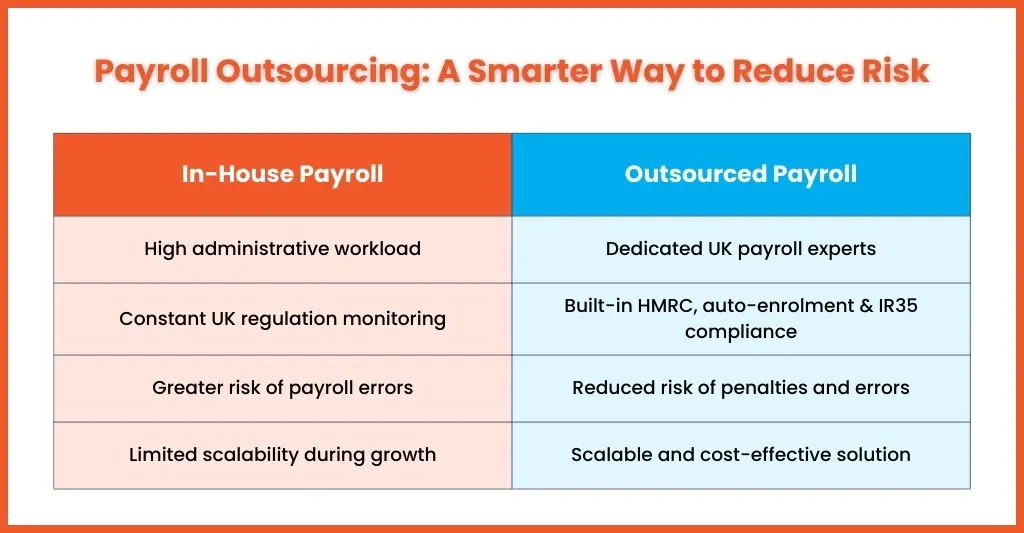
We understand that achieving zero payroll errors requires significant investments in human resources and tools, which is a tall ask for your small accounting firm. All to be taken into consideration is the complexity and time-consuming nature of the current UK payroll and its regulations. In such circumstances, using affordable payroll services of reputed providers like Equallto makes sense.
Can Payroll Outsourcing Reduce Errors?
When you outsource your payroll to a reputable accounting payroll outsourcing service provider, you will get a helping hand, unlike in-house payroll, in reducing your payroll errors. When we say assistance, we mean:
- Getting access to payroll experts who are well-versed in UK payroll laws and regulations
- Helping in meeting the HMRC, auto-enrolment rules, and IR35 compliance
- Freeing up your internal resources to focus on client-advisory and other value adding services
- Reduce the risk of fines and penalties
FAQs: Frequently Asked Questions
What are the most common payroll errors in the UK?
Some of the most common payroll errors to come across are incorrect pay amounts, tax and National Insurance errors, failure to account for holiday pay, and misclassified employees.
Can outsourcing payroll help reduce payroll errors?
Yes, outsourcing payroll to a specialist provider like Equallto will ensure accurate processing, compliance with regulations, and reduces the risk of errors.
Do payroll errors increase HMRC penalties and inspections?
Yes, payroll errors will lead to penalties from HMRC. Therefore, avoid late payments, incorrect tax deductions, or missed pension contributions.
What happens if payroll corrections are not made promptly?
Delays in payroll corrections will lead to overpayments or underpayments. Additionally, inaccuracies may complicate tax filings, risking further fines and damaging your client’s reputation.
Can an employee sue for repeated payroll mistakes?
Yes, employees can sue for repeated payroll mistakes if these errors lead to financial harm or violate employment contracts.
Conclusion
There was a time when payroll errors were not taken seriously, but over time, they have become costly, stressful, and easily preventable, making them difficult to ignore. Hence, the time has come for you to seriously invest in reliable payroll software, train your accountants on the new UK regulations, and stay updated to reduce error risks.
Suppose making such an investment is too costly for your practice, then give serious thought to payroll outsourcing services offered by reputed payroll service providers like Equallto. Our services will be ideal for your practice’s payroll needs.
Our payroll outsourcing services are a perfect blend of human expertise and AI automation. The result is a smooth, efficient process that enhances your payroll operations for your client’s.
Are payroll errors giving you constant headaches? Use our contact form, and we will make sure to relieve this headache and protect your clients and your practice from penalties.