
Are you still stuck between paper piles and spreadsheets?
No more juggling spreadsheets, piles of paper receipts, or doing calculations by hand, it’s time to act now. 6 April 2026 is already knocking on the door, the start of the new tax year when HMRC won’t wait. Start keeping your account records using MTD Software as required under HM Revenue & Customs’ digital tax initiative.
Making Tax Digital software reduces the tax stress by digitising income, expenses, and invoices, automating VAT and Income Tax submissions, quarterly updates and final declarations for small practices, this means fewer errors, less manual work, and more time for growth. MTD for ITSA goes beyond compliance; it’s your opportunity to streamline records, automate filings, and optimise workflows through your Agent Services Account (ASA), making your entire practice more efficient and manageable.
This guide delivers key insights about MTD essentials, top software tools for accounting workflows, and simple steps to prepare accounts, turning compliance into easier profitable work.
What Is MTD (Making Tax Digital) Software?
Making Tax Digital software is a set of HMRC-approved digital tools that makes managing taxes easier for small accountants and their clients. It keeps track of income, expenses, and invoices automatically, and calculates VAT and Income Tax to reduce mistakes. The software can also submit returns and quarterly updates directly to HMRC, saving time and effort. Overall, it makes tax management faster, simpler, and less stressful.
These solutions keep all transaction records digitally and automate quarterly updates and submissions for VAT & Income Tax Self Assessment (ITSA). This means accountants can stop relying on the spreadsheets or paper records. This software connects directly to HMRC, ensuring accounts stay up to date in real time.
By reducing manual work, it cuts errors and saves hours of effort, which is perfect for small practices managing multiple clients. April 2026, the start of the new tax year, using this Software will be essential for staying both compliant and efficient.
MTD Compliance Deadlines Your Clients Cannot Miss
Making Tax Digital for Income Tax is changing the way sole traders and landlords do their taxes. They will not be filling out their taxes once a year anymore. Instead, sole traders and landlords will have to keep records and send updates to the government using special software that HMRC says is okay to use. For accounting firms this means they have to get their clients ready to send in reports every quarter. Accounting firms also have to make sure their own systems are working correctly and following all the rules.
The new system starts in April 2026 for traders and landlords who make more than £50,000 from their businesses or properties based on what they made in 2024 and 2025. Then in April 2027 it will apply to people who make than £30,000. Finally in April 2028 Making Tax Digital for Income Tax will apply to traders and landlords who make more, than £20,000.
2026 – 2027 MTD Deadlines:
| Period | Quarterly Update Due | Notes |
| 6 Apr – 5 Jul 2026 | 7 Aug 2026 | First period of the tax year |
| 6 Jul – 5 Oct 2026 | 7 Nov 2026 | 1-month buffer to submit |
| 6 Oct – 5 Jan 2027 | 7 Feb 2027 | Avoids holiday peak |
| 6 Jan – 5 Apr 2027 | 7 May 2027 | Closes the tax year |
| Final declaration | 31 Jan 2028 | Confirms full year (pre-filled) |
Now is the time to check 2024/ 2025 income, set up records in MTD software, and register through your Agent Services Account (ASA). Late updates carry £200 + penalties, so automation and reminders are essential. VAT registered accounts follow similar quarterly cycles (due 7 days after the period ends), and software reminders help keep multiple accounts on track effortlessly.
The Three Types of MTD Software Explained
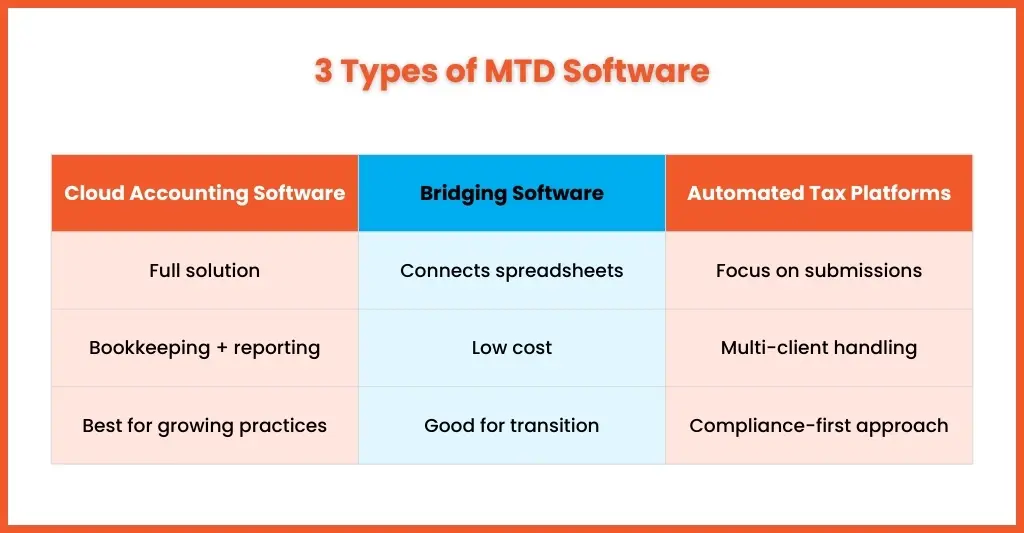
Three main types of HMRC approved Making Tax Digital software suit different practice needs, all enabling digital records quarterly updates, and ITSA (Income Tax Self Assessment) submissions.
1. Cloud-based Accounting Software
Xero, QuickBooks, and Sage are examples of full-featured software that handle bookkeeping, invoicing and reporting. They also automatically generate End of Period Statement (EOPS) and VAT returns, making them ideal for small practices that need a complete, all-in-one work-flow.
2. Bridging Software
Bridging software connects spreadsheets or older accounting systems directly to HMRC. It’s perfect for small practices transitioning from paper or manual records without having to overhaul their entire workflow.
3. Automated Tax Platforms
Focuses on tax calculations, submission preparation, and multi-account oversight efficient for small practices prioritising compliance volume.
Choose the software that fits your workflow to reduce errors and make compliance easier. From April 2026, the start of the 2026/27 tax year. MTD software for ITSA becomes mandatory for accounts over £50k, the right tools will help your practice stay on track without extra stress.
What Is the Best HMRC-Recognised MTD Software for UK Accountants?
MTD Software is essential for accountants to stay compliant with HMRC guidance while working efficiently. As the official guidance confirms that there is no single “Best” software. Instead accountants should check compatible options via the VAT and Income Tax Self Assessment lists. All HMRC approved tools meet the core requirements for digital records keeping and submissions, so the right choice depends on your firm’s workflow and needs.
1. SAGE
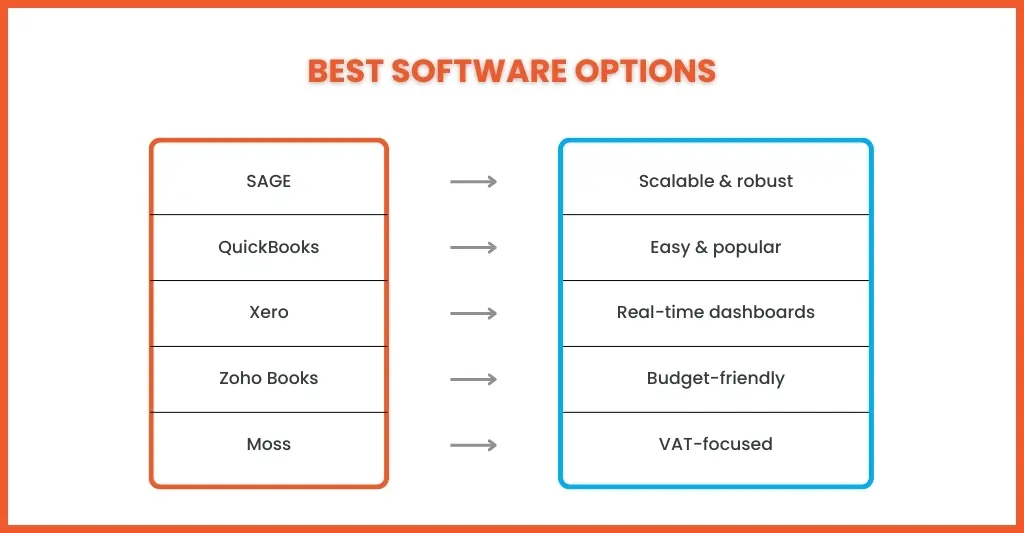
Scalable solutions that support record keeping, automate VAT calculations, & quarterly submissions. It is particularly well suited for multiple clients’ practices. Sage is listed on HMRC’s VAT register and is expanding its support for ITSA compliance, making it a reliable choice for accountants seeking both efficiency and regulatory confidence.
2. QUICKBOOKS
It is a user-friendly bookkeeping software that integrates directly with the MTD reporting for VAT. It’s a ideal for small to medium practices and is fully recognized by HMRC for both record keeping and submissions providing a reliable and efficient solution for accountants managing client VAT obligations.
3. Xero
This is a cloud-based accounting solution offering real time dashboards, multiple currency invoicing and MTD ready APIs. It is particularly well-suited for client collaboration and managing complex financial records, and it is verified on HMRC’s VAT and ITSA registers, ensuring full compliance.
4. Zoho Books
This software provides an affordable and user-friendly solution for VAT compliance, expense tracking, and workflow automation. It is ideal for small firms and is included in HMRC’s approved software search, making it a reliable choice for accountants seeking simplicity and efficiency.
5. Moss:
Moss specialises in VAT automation and compliance monitoring, making it particularly effective for VAT-heavy workflows. It is listed on HMRC’s official register for MTD VAT submissions, helping accountants streamline reporting and maintain regulatory compliance.
How to Choose the Right MTD Software for Your Practice and Clients
Choosing MTD software for your practice and clients is a big decision. You need to consider several factors when choosing a digital tax compliance tool.
Here are some things to consider:
- HMRC recognition is very important. You have to make sure the software complies with all the rules.
- It should be user-friendly, allowing the team to adopt it quickly and maintain accurate records without a steep learning curve.
- The software should be able to automate tasks, which will help reduce the amount of manual work and mistakes.
- The system should manage multiple businesses efficiently, adapting to different accounting needs.
- It should offer good value, helping to cut down on routine administrative tasks and streamline workflow.
The right digital tax system keeps your practice running smoothly. It organises records for both Income Tax and VAT, making submissions straightforward and keeping compliance simple and stress-free.
The Bigger Picture — What MTD Software Does for Your Practice
MTD software isn’t just about ticking compliance boxes they genuinely change how small accounting firms run their practice. They keep records up to date, track tax positions automatically, and produce quarterly updates without extra hassle. For firms that handle clients or complicated accounting periods making reports simpler helps a lot. It makes deadlines easier to keep track of and reduces the stress of admin work. This leads to accurate work and less time spent on routine tasks. As a result the overall workflow becomes smoother.
Cloud-based Making Tax Digital Software makes accounting easier and more efficient. These tools help teams work together seamlessly. They also allow access to financial data from anywhere. This provides updates and forecasts.
Automation helps by reducing tasks. This frees up time, for work and strategic planning. These tools help ensure compliance. They also make workflows smoother. This improves service delivery. Boosts overall productivity for the practice.
Frequently Asked Questions About MTD Software
What does MTD software actually do?
Making Tax Digital software helps keep digital records, submit VAT and Income Tax automatically, and generate quarterly updates and final declarations, reducing errors and saving time.
What is the best HMRC-recognised MTD software for accountants?
The main HMRC–approved software includes Sage, QuickBooks, Xero, Zoho Books, and Moss. These support the Making Tax Digital software for record-keeping, automated submissions and account management.
Can I use third-party software for MTD VAT submissions?
Yes, bridging software can link spreadsheets to HMRC, but full HMRC-approved software is more reliable. It reduces manual work, cuts errors, and makes reporting smoother and more accurate.
Can MTD software reduce errors and improve efficiency for multiple clients?
Yes, it centralises records, automates submissions, and updates accounts in real-time, making client management faster and more accurate.
How much will MTD Software cost?
MTD Software ranges from free basic options to paid plans starting around £7 per month or £84 per year, with setup fees of £280–£350. Prices may increases after initial discounts expire.
Get Your Practice MTD-Ready — Without the Overhead
Getting your practice ready, for MTD does not have to be a task. With the help of Equallto, you can make it easier to keep digital records updated every quarter automatically and make tax submissions less of a headache. This means your team can focus on important things like giving advice to clients and planning their finances instead of dealing with lots of paperwork or checking spreadsheets.
With cloud-based tools, it is easier to connect systems and information flows smoothly between your practice and HMRC. This helps to reduce mistakes and missing deadlines. Even small accounting practices can handle clients easily and stay on the right side of the law without spending too much money or needing more staff. Digital solutions make staying compliant straightforward and easier to manage, helping accountants keep processes efficient and accurate.