
There are over 5.5 million small businesses in the UK, and most of them are depend on a small accounting practice to keep the books in order, handle payroll, file tax returns and financial reporting. According to industry data from the ICAEW on the structure of accounting firms in the UK At the same time, compliance rules just keep piling up, Making Tax Digital is getting more complex and clients are expecting fast responses from their accountants. For many accounting firms, the workload is multiplying but finding and hiring the right people is getting harder and more expensive.
That’s where a Virtual Accountant comes in, a game-changer that lets practices do the work without the hefty price tag of recruiting full time staff. Instead, they’re using remote accounting professionals to keep their daily operations running smoothly. The work gets done, deadlines are met, and the firm avoids the hassle and cost of taking on in-house employees.
In this blog, we’re going to take a closer look at what a Virtual Accountant is all about, how they work, what kind of services they offer, and why more and more UK practices are jumping on this model in 2026.
What Is a Virtual Accountant and How Do Virtual Accounts Work?
A Virtual Accountant is an accounting professional who works remotely while supporting the daily operations of a small accounting practice. They perform the same tasks as an office-based accountant, but they do not sit inside the firm’s office. Instead of being in the office, virtual accountants work through secure cloud systems, collaborating with the practice team online.
They use cloud accounting platforms like Xero, QuickBooks, or Sage which let them access and work on the financial data from anywhere, and collaborate with the in-house team online. Firms can just assign tasks, share files, and track progress all within the software. The virtual accountant logs in, does the work, and knocks it back out to the team just like an in-house team member.
For many small practices this set up is a stress-free and straightforward. The virtual accountant just fits right in with the workflow, without the need for extra office space, equipment, or long-term salary commitments.
What Does a Virtual Accountant Actually Do for a UK Practice?
A Virtual Accountant supports the operational side of a small to mid-sized accounting practice. They handle routine work that takes up a large part of the team’s time. When these tasks are managed efficiently, partners and senior accountants can focus on advisory work and client relationships.
In many cases, the client does not even realise the work is being done remotely. The process remains the same, but the firm gains additional support behind the scenes.
Here are some of the common tasks handled by a Virtual Accountant.
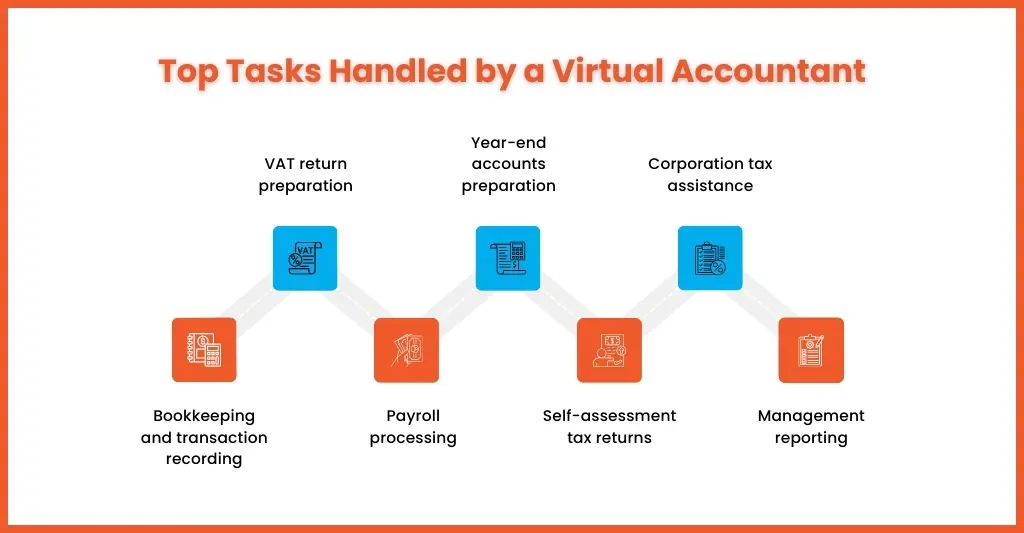
Bookkeeping and Transaction Recording
Daily bookkeeping is one of the most time-consuming tasks for many accounting teams. A Virtual Accountant records transactions, categorises expenses, and ensures that ledgers remain accurate.
VAT Return Preparation
Preparing VAT returns requires careful record keeping and attention to compliance rules. A Virtual Accountant helps ensure VAT submissions follow HMRC guidelines and Making Tax Digital requirements.
Payroll Processing
Payroll involves calculations, RTI submissions, and compliance checks. Virtual accounting support helps accounting firms manage payroll work without delays.
Year-End Accounts Preparation
A Virtual Accountant can assist with drafting financial statements and preparing year-end accounts for review by the senior accountant.
Self Assessment Tax Returns
Personal tax returns are another area where virtual accounting support helps reduce workload during busy seasons.
Corporation Tax Assistance
Many Virtual Accountants also assist with corporation tax computations and supporting schedules.
Management Reporting
Regular financial reports help clients understand how their business is performing. A Virtual Accountant prepares these reports using cloud accounting software.
When these tasks are handled consistently, a small accounting practice can maintain service quality while managing more clients.
Key Benefits of Hiring a Virtual Accountant for Your UK Practice
Hiring a Virtual Accountant changes how a small accounting firm manages its resources. Instead of increasing overhead costs, the firm gains flexible support that can grow along with client demand.
For many small accounting practices, this approach helps solve two problems at once. It reduces pressure on the internal team and improves the firm’s ability to deliver work on time.
Below are some of the main benefits.
Lower Operating Costs
Hiring full time staff includes salaries, office space, equipment, and benefits. Virtual accounting support removes many of these expenses.
Flexible Workload Support
During tax season or year-end periods, workload increases quickly. A Virtual Accountant can provide additional support during busy months.
Access to Experienced Professionals
Many Virtual Accountants work with multiple accounting firms and bring practical experience from different industries.
Faster Turnaround Time
Routine work gets completed faster when extra support is available.
Less Recruitment Pressure
Finding qualified accountants can take months. Virtual accounting support can be arranged much faster.
More Time for Advisory Services
Partners and senior accountants can focus on advisory work, planning, and client strategy.
Improved Work Flow
When daily accounting work is handled efficiently, the entire practice team operates more smoothly.
Better Profit Margins
Lower operational costs combined with consistent client fees improve overall profitability.
For small accounting firms that want structured remote support, Equallto provides trained professionals who work closely with UK practices and understand compliance requirements.
How Virtual Accounts Help UK Practices Manage Client Finances Remotely
Cloud accounting has changed how small accounting practices operate. With secure access to financial data, a Virtual Accountant can update books, reconcile accounts, and prepare reports without being physically present.
Clients can upload invoices and receipts digitally, and the virtual accounting service processes them quickly. This reduces paperwork and manual errors. Real-time data allows both the firm and the client to view accurate financial information at any time.
Remote access also improves communication. Queries can be resolved through video meetings and shared dashboards. A Virtual Accountant ensures that even if your clients are based in different parts of the UK, their financial records are handled efficiently and securely.
Virtual Accountant vs In-House Accountant — Which Is Right for Your Practice?
Choosing between a Virtual Accountant and an in-house accountant depends on your budget, growth plans, and workload. Below is a clear comparison for small to mid-sized accounting firms.
| Factor | Virtual Accountant | In-House Accountant |
| Cost | Flexible monthly fee | Fixed salary plus benefits |
| Office Space | Not required | Required |
| Scalability | Easy to adjust hours | Difficult to adjust quickly |
| Recruitment | Quick onboarding | Long hiring process |
| Training Cost | Minimal | Ongoing training needed |
| Flexibility | Remote and adaptable | Limited to office hours |
| Long Term Commitment | Contract based | Permanent employment |
For most small accounting practices, a Virtual Accountant offers more flexibility and lower risk. However, firms with large internal teams and stable workloads may prefer in house staff. Many firms choose a mix of both for balanced support.
What to Look for When You Hire a Virtual Accountant in the UK
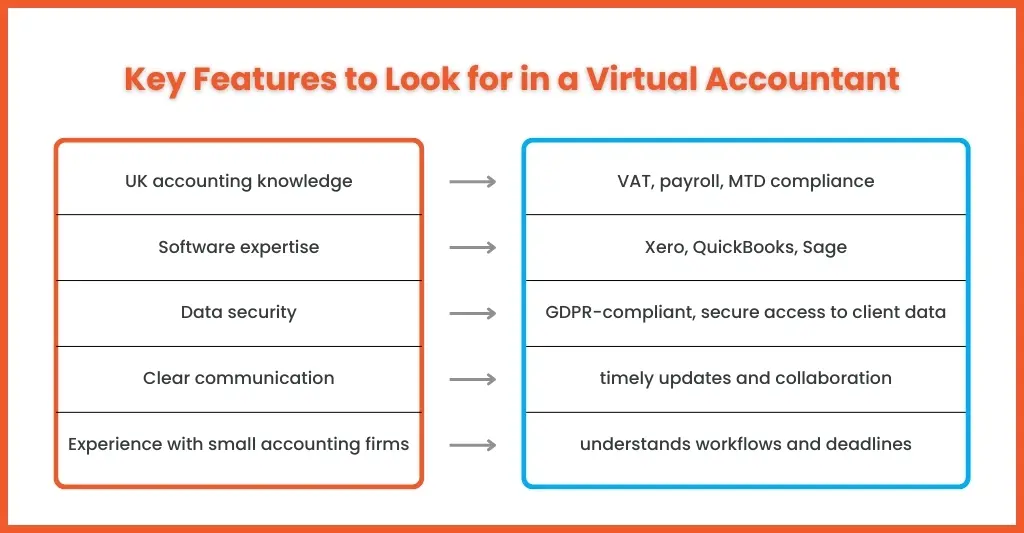
Hiring the right Virtual Accountant is important for maintaining quality and trust within your small accounting practice.
1. UK Accounting Knowledge
They must understand HMRC rules, VAT regulations, and Making Tax Digital requirements.
2. Software Expertise
Ensure they are comfortable with Xero, QuickBooks, Sage, and other tools your accounting firm uses.
3. Data Security Standards
They should follow strict data protection procedures and GDPR compliance.
4. Clear Communication
Regular updates and timely responses are essential for smooth collaboration.
5. Experience with Small Accounting Firms
Someone who understands the workflow of an accounting practice can adapt quickly.
When chosen carefully, a Virtual Accountant becomes a long-term partner who supports your growth plans.
People Also Ask
Can a virtual accountant handle HMRC submissions and MTD compliance?
Yes. A virtual accountant will prepare and submit VAT returns, payroll reports & other HMRC filings using the approved software all in line with the Making Tax Digital guidelines.
How much does a virtual accountant cost in the UK?
The cost can vary depending on workload, experience, and the provider. However, many UK firms typically pay:
1. £1,200 – £2,500 per month for a full-time virtual accountant
2. £20 – £40 per hour for part-time or project-based support
In comparison, hiring a full-time in-house accountant in the UK can cost £35,000 – £55,000 per year plus employer taxes, pension contributions, office space, and recruitment costs. Because of this difference, many firms find that virtual accounting support can reduce staffing costs significantly.
How do I hire a virtual accountant for my UK accounting practice?
You can partner with a specialist provider like Equallto that offers trained professionals who understand the UK compliance requirements and the workflows of small accounting firms.
Is client data safe when using a virtual accountant?
If proper security systems and access controls are in place then yes, it is safe. Reputable providers will use encrypted systems and secure logins to look after client’s data.
Can a virtual accountant help out during peak tax season?
One of the biggest advantages of having a Virtual Accountant on board is the ability to get some extra support during busy periods.
The Future of UK Accounting Practices Is Virtual — Are You Keeping Up?
The accounting industry is moving over to cloud systems and remote collaboration at a rapid rate. Clients now expect quick responses, digital reporting and pretty smooth communication. If your accounting practice is keen to adapt to virtual support then you should be able to handle more clients without incurring any fixed costs.
A Virtual Accountant for your small accounting firm can be a game changer, it lets you stay competitive, improve turnaround time and protect profit margins. Instead of worry about recruiting or office expenses, you can just focus on delivering value to your clients.
Equallto works closely with small to mid-sized accounting firms across the UK by providing reliable and trained Virtual Accountant support. If you want to scale your practice in 2026 without increasing overhead costs, now is the time to explore a smarter way of working.
Speak to Equallto today and see how a Virtual Accountant can support your growth.