
To reduce payroll errors and avoid HMRC fines, you will need to focus on one thing: creating a payroll process that is accurate, consistent, and proactive, not rushed at the last minute.
We are sure you must have considerable experience in payroll, and you also know that a single mistake like:
- A missed RTI submission
- An incorrect PAYE deduction
- A pension contribution error
- A duplicated employee payment
Will create huge problems for your clients. These mistakes will lead to:
- Employee complaints
- Compliance risks
- HMRC penalties
- Damaged client trust
- Hours of rework
A survey of 1000 SMEs by Employment Hero revealed that 84% admitted to payroll errors and more than a third having faced fines, costing them thousands of pounds. That’s why in 2026, HMRC is placing special focus on payroll compliance by strengthening its digital monitoring and reporting scrutiny.
To stay on top of their game, UK practices are now investing in payroll automation, standardised workflows, and outsourced payroll support to reduce risk before problems happen.
In this guide, we’ll break down:
- The most common payroll mistakes
- How HMRC penalties happen
- Best practices to improve payroll accuracy
- How technology and outsourcing reduce payroll risks
Practical ways accounting firms can protect both profitability and compliance
Having a modern payroll processing isn’t just about paying your clients’ employees correctly. It’s about protecting your practice reputation.
Common Payroll Errors That Trigger HMRC Fines
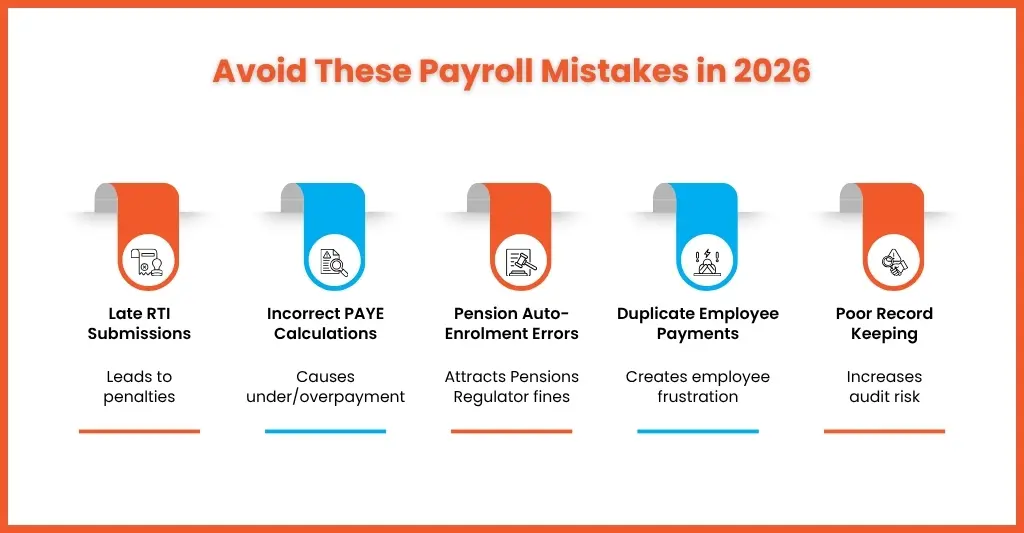
Committing payroll errors is common even among professional and experienced practices. These errors occur especially during peak seasons. But HMRC is not going soft on these errors and has automated the identification of these inconsistencies.
Here are the most common payroll mistakes that lead to penalties and compliance issues.
Late RTI Submissions
Real Time Information (RTI) submissions should be sent to HMRC on or before employees are paid.
Common causes include:
- Forgotten submissions
- Staff shortages
- Last-minute payroll changes
- Manual processing delays
A single late submission will trigger penalties if it becomes a repeated issue.
Incorrect Employee Information
HMRC is not in the mood to let go of even small data entry errors leading to major compliance issues.
Examples include:
- Incorrect NI numbers
- Wrong tax codes
- Inaccurate starter details
- Duplicate employee records
Such mistakes often lead to incorrect PAYE calculations and employee disputes.
Pension Auto-Enrolment Errors
We have even noticed multiple practices underestimating the complexities of payroll compliance. Due to the errors that get done like:
- Failing to enrol eligible staff
- Incorrect contribution calculations
- Missed re-enrolment dates
- Delayed statutory communications
Such errors, if noticed by the Pensions Regulator, can impose penalties separately from HMRC.
Incorrect PAYE and NIC Calculations
Manual payroll calculations increase the risk of:
- Underpaid tax
- Overpaid NIC
- Incorrect statutory payments
- Payroll reconciliation discrepancies
These issues can trigger investigations and correction notices.
Poor Record Keeping
All payroll records that you send to the HMRC are required to be maintained accurately for 3 years. Missing or incomplete records will create issues during:
- Audits
- Investigations
- Employee disputes
- Compliance reviews
Why Payroll Errors Are Costly for UK Businesses
The cost of payroll errors includes penalties, which are just one aspect of the costs involved. The impact of payroll errors goes far beyond and will have huge effects, such as:
- Client trust
- Operational efficiency
- Staff workload
- Profitability
- Reputation
Financial Penalties
Late PAYE submissions and inaccuracies will result in:
- Monthly HMRC penalties
- Interest charges
- Correction costs
- Pension compliance fines
If you are handling multiple clients, then the cost can escalate very quickly
Employee Frustration
Frequent payroll errors will directly impact the employees, negatively impacting their salaries. Such delays will lead to
- Stress
- Complaints
- Reduced morale
- Reputational damage for employers
Ultimately, this will lead to significant reputational damage and a loss of trust among employees and clients in your practice.
Operational Disruption
Rectifying payroll errors consumes a lot of time. Under it, your team member will have to:
- Investigate discrepancies
- Process corrections
- Respond to HMRC queries
- Communicate with employees
- Rerun payroll calculations
This creates unnecessary workload during already busy periods.
Reputational Damage for Accounting Practices
For accountants offering payroll services, trust is everything. A few recurring payroll mistakes can make your clients question:
- Overall service quality
- Compliance capabilities
- Reliability during deadlines
Maintaining payroll accuracy is no longer limited to an operational task; it’s part of client retention. To achieve that without much cost you must explore outsourcing payroll.
Best Practices to Reduce Payroll Errors
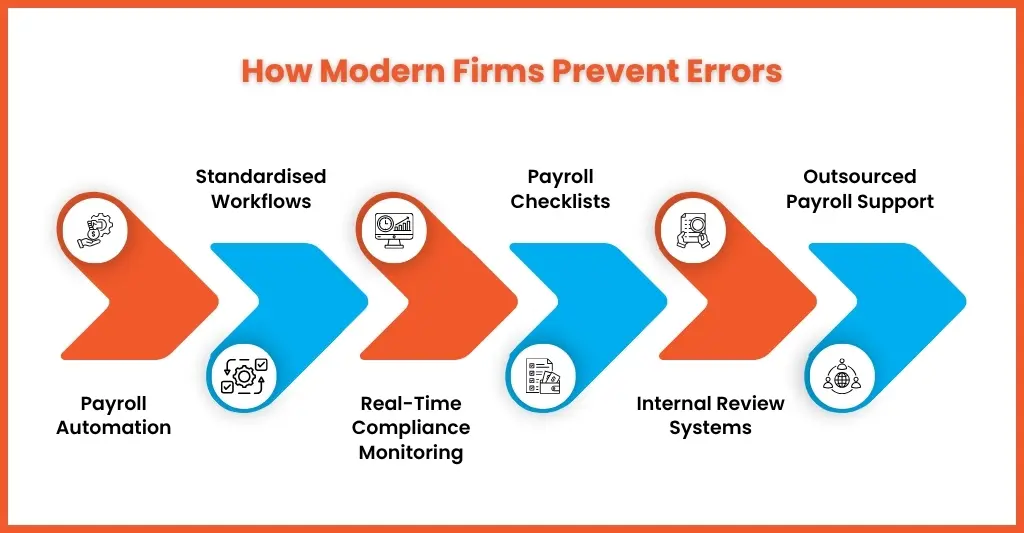
In order to reduce payroll errors, you will need to invest in structures, not in pressuring your team to work harder.
Here are the best practices that leading firms now follow.
Standardise Payroll Processes
Every payroll workflow must follow consistent procedures.
This includes:
- Employee onboarding
- RTI submissions
- Approval timelines
- Pension processing
- Reconciliation procedures
Such standardisation will reduce reliance on individual team members, especially when they are absent.
Use Payroll Checklists
Maintain a payroll checklist to streamline oversight
Pre-payroll checks may include:
- Verifying employee changes
- Reviewing tax codes
- Confirming hours and overtime
- Checking pension contributions
- Validating PAYE calculations
Automate Repetitive Tasks
Manual handling of data entry always increases the chance of errors. By adopting automation, you can reduce:
- Duplicate work
- Incorrect calculations
- Missed deadlines
- Reconciliation issues
Many firms have adopted it and are now automating:
- Payslip generation
- RTI filing
- Pension submissions
- Payroll reminders
Maintain Clean Employee Data
There will be no payroll accuracy if there is no good-quality payroll data. Therefore, conduct a frequent review of:
- NI numbers
- Addresses
- Bank details
- Tax codes
- Employment status
This will keep the data updated and accurate all the time.
Create Internal Review Processes
Also, give preference to a second review to catch errors which have been missed earlier. Even experienced payroll teams benefit from:
- Approval checks
- Payroll audits
- Variance reviews
- Reconciliation testing
A second review sometime may feel unwanted, but having it is better because prevention is always cheaper than correction.
Technology Solutions to Prevent Payroll Mistakes
Apart from procedures, another way to reduce payroll errors is the use of modern payroll technology, especially when it comes to compliance management.
Cloud payroll systems now provide:
- Automated calculations
- Real-time reporting
- Digital audit trails
- Integrated compliance alerts
Payroll Automation
Automation removes many manual tasks.
It improves:
- Speed
- Consistency
- Reporting accuracy
Automation through payroll software can automatically calculate:
- PAYE
- NIC
- Pension deductions
- Statutory payments
Real-Time Compliance Monitoring
With a modern payroll system like payroll software, you can get alerts on:
- Filing deadlines
- Missing data
- Incorrect submissions
- Pension obligations
This reduces the risk of overlooked compliance issues.
Cloud-Based Payroll Systems
Right now, it is advised to get cloud-based payroll software (preferred by practices and clients) for collaboration between:
- Accountants
- Payroll teams
- Employers
- HR departments
Thanks to these systems, data becomes accessible in real time from anywhere.
Integrated Reporting
Integrated payroll dashboards provide visibility and transparency into:
- Liabilities
- Payroll costs
- Submission statuses
- Compliance tracking
This improves your operational control and ability to provide valuable insights to your clients.
By combining payroll technology with outsourced payroll support, you can achieve the highest efficiency gains. That’s why many UK practices are switching from in-house payroll to outsourcing to partners like Equallto to combine payroll expertise with scalable operational support.
HMRC Compliance and Payroll Accuracy
HMRC compliance is becoming increasingly digital thanks to the MTD initiative. That means payroll accuracy matters more than ever.
Real Time Information (RTI)
When an employee is paid, their payroll information is required through RTI. Late or inaccurate reporting will increase penalty risk.
Digital Record Requirements
HMRC has already mandated that all payroll records be kept in digital format for 3 years, which includes
- Employee payment history
- Deduction records
- Pension information
Only the best payroll software can help you maintain audit-ready records.
Making Tax Digital Trends
MTD is already applicable to VAT and Income Tax and will be further implemented, making the entire accounting aspect connected and automated. By relying heavily on spreadsheets, you may struggle to keep up.
The Importance of Audit Trails
Latest versions of payroll software place special focus on transparency, and that’s why they now feature:
- Timestamped actions
- Approval histories
- Digital reporting logs
This improves transparency during compliance reviews.
Compliance today is no longer reactive; it’s system-driven.
Frequently Asked Questions (FAQ)
What are the common payroll mistakes that lead to HMRC fines?
The most common payroll mistakes include:
a. Late RTI submissions
b. Incorrect PAYE calculations
c. Wrong employee tax codes
d. Pension auto-enrolment errors
e. Incomplete payroll records
These issues often occur when payroll processing is manual or inconsistent.
Does outsourcing payroll help avoid HMRC fines?
Yes. Outsourcing payroll helps reduce compliance risks by providing:
a. Specialist payroll expertise
b. Automated workflows
c. Deadline management
d. Accurate reporting
e. Scalable support during busy periods
Many accounting practices outsource payroll to improve consistency and reduce operational pressure.
What are the costs of payroll errors for UK companies?
Payroll errors can result in:
a. HMRC penalties
b. Employee disputes
c. Reputational damage
d. Operational delays
e. Increased administrative workload
The indirect cost of lost client trust can often exceed the financial penalty itself.
How long does an employer have to correct a payroll mistake in the UK?
Employers in the UK are expected to correct payroll mistakes as soon as they are discovered. The exact timeframe and process depend on how the issue is being handled.
Conclusion
To reduce payroll errors and avoid HMRC fines you will not have to spend endless hours preventing them. You will need to make a smart decision by investing in payroll systems.
In 2026, accounting practices face increasing pressure from:
- Tighter HMRC compliance expectations
- Rising UK payroll complexity
- Staffing shortages
- Growing client expectations
Only those practices that have succeeded in achieving it have been combined:
- Automation
- Structured workflows
- Compliance expertise
- Scalable payroll support
It’s critical to achieving this for protecting profitability, reputation, and long-term client relationships.
No wonder many UK accounting practices now partner with providers like Equallto for flexible payroll support, streamlined workflows, and scalable operational capacity without increasing fixed overheads.
The goal isn’t simply to process payroll. It’s to process payroll confidently, accurately, and consistently every single time.
Want to make your payroll services perfect? Approach us through our contact form and see how we make your payroll services ready for the future.
